interactive learning, Spring

Creative Spring Activities for Homeschoolers

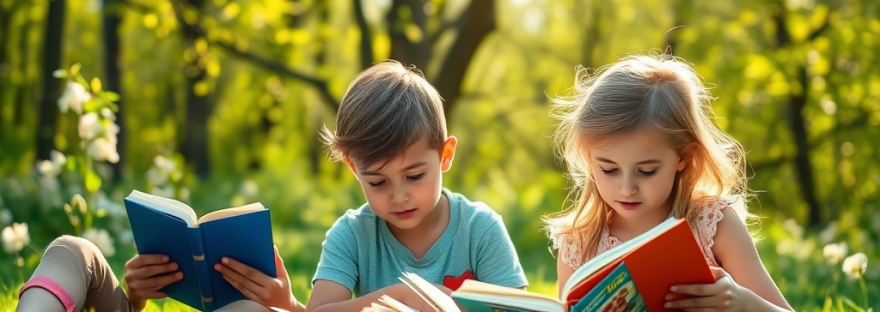
Spring is such a wonderful time to embrace homeschooling! It’s a season of renewal. A season offering times of exploration. A time to incorporate hands-on, creative learning experiences! In this post, I hope to awaken some ideas for you. I also want to suggest some ready-to-use resources that you can easily incorporate into fun, creative Spring learning!

Nature studies are a wonderful addition to any homeschool curriculum! They help foster curiosity, environmental awareness, and a love for the natural world. Here are some ideas and resources to incorporate. These resources will encourage your kids to document their surroundings—sketching plants, animals, or landscapes they see….and much, much more! There is something for ALL-AGES!!

ABC Nature Hunt

A FUN nature hunt that can be used by an individual student, a group of students or an entire family!

Life Cycle of a Frog | Differentiated

This 1st / 2nd Grade Science resource provides postershandouts and center activities to help students learn about the life cycle of a frog! Seven stages are shown and pages come in color and b/w. Easy to use and differentiated (Based on student ability – Easiest: Color the life cycle / Medium: Color, cut and paste the life cycle / Hardest: Draw the life cycle)

Life Cycle of a Flower| Science Student Created Book

This cross-curricular (Science Literacy – Writing ) product will have students creating their very own mini-books detailing the life cycle of a flower! Knowledge students will learn: Students will learn what flowers (plants) need to live and grow (soil, water, sun, air) and how a planted seed becomes a sprout, then a seedling and then a beautiful flower. Students will:— read the text — draw a picture — write (copy) the written text— write (copy) the written text

Life Cycle of a Butterfly | Science Student Created Book

This Science – Language Arts resource with have students creating their very own mini-book of the life cycle of a butterfly! Knowledge students will learn: The book will begin with the butterfly laying an egg on a leaf and continue as a caterpillar begins to grow in the egg, hatches and begins to eat. Students will learn what the caterpillar eats and that it is a type of larva. As the book progresses, students will write about the caterpillar building a cocoon and it’s life as a pupa (and a chrysalis) before emerging as a beautiful butterfly! On each page, students will … read the text, draw a picture and then write (copy) the written text.

Mushroom Bundle | Studying Fungi

My Teaching Library has bundled 5 MUSHROOM products to help you SAVE and have a variety of fantastic classroom resources to help you teach.
– If you want to give your student(s) a fun, research-based unit study, this bundle is for you!
– If you teach Science for 6th-12th grades, this bundle is for you!
– If you teach an outdoor nature-based class, this bundle is for you!

North American Birds of Prey Research / Report Pages

Birds of Prey’ is a 41 page download and offers pages specifically designed to help students organize and present research reports for each bird. Also included are several ‘blank’ pages for students to use when researching other birds as well as pages to add additional information to any report.

    5 Paragraph Writing Guide | Nature-Themed Local Birds

    Easy-to-use, step-by-step, print-and-go guide for students to use as they learn to write a 5-paragraph essay! This nature-themed resource has a local bird focus and guides students as they research, observe and write about one bird species that lives in their local area.

    This 3-page resource outlines paragraph by paragraph what to include and gives space for students to write detailed notes.

    What will students learn and observe about a bird species before they begin writing?
    – where the bird geographically lives
    – habitat(s) where they are most likely found
    – physical characteristics (coloring, markings, size, bill, feet)
    – diet (herbivore, carnivore, omnivore) and where/how they find/gather their food
    – predators and self-protection
    – interesting facts

    Plus, this guide will encourage students to reflect on what they have learned.

    Once completed, students will be able to take the guide and their notes and write amazing 5-paragraph essays!

    Use once as one assignment for one bird of their choice or use again and again to create an entire collection of essays on local birds. Regardless of where you live, these pages will have students observing and learning about local birds.

    Let’s Learn about Plants | Science for 1st and 2nd Grades

    Let’s Learn about Plants is a Science resource that can be used in conjunction with your own curriculum or as a separate – individual unit! Students will be actively learning as the cut, color, paste, write and learn! They will learn about the parts of a plant and the life cycle!

    Botany – Plants | Interactive Learning

    Give students an engaging way to learn about plants with this interactive, project based resource. Designed to be used for multiple ages and grades, 2nd-6th grades, students will learn about plants:
    – classification
    – photosynthesis
    – the plant cell
    – parts of the plant
    – things plants need to grow
    – the life cycle of a plant
     – plant leaves
     – different types of plants (non-flowering, carnivorous, poisonous)

    These are just a few ideas to get you started! My Teaching Library has many other NATURE-THEMED resources that you’ll find on MyTeachingLibrary.com!


    All-Access members do NOT pay for ANY OF THE ABOVE RESORUCES or ANY resource on My Teaching Library!
    Become an All-Access member today!

    ________________________

    Get the MOST from My Teaching Library by connecting with us here:
    FB Group (PRIVATE GROUP)
    FB Page
    Instagram
    Pinterest
    X (formally twitter)
    YouTube