Book Units, BUNDLES

Why and How to Add “Little House on the Prairie” Books to your Homeschool lesson plans

If you are teaching 3rd-6th grades, want to teach good chapter books with wholesome messages, these literature units are for YOU! With over 400+ pages in the BUNDLE, you can easily plan to cover an entire year. 

Why read “Little House” books? 

  • Educational Value: The series covers a wide range of topics, including history, science, home economics, and the importance of hard work and perseverance. It can be used to teach children about the challenges and triumphs of life in the past. 
  • Wholesome Values: The books instill positive values such as cooperation, responsibility, and the importance of family. They also highlight the sacrifices made by families to build a better life. 
  • Historical Context: The series provides a window into the lives of early American settlers, offering insights into the culture, traditions, and daily life of the time. 
  • Personal Connection: Many readers find a personal connection to the stories, as they relate to their own experiences or the experiences of their families. The series can evoke memories and emotions that resonate with readers of all ages. 
  • Timeless Appeal: The “Little House” books have stood the test of time, remaining relevant and enjoyable for new generations of readers. They continue to inspire and entertain, making them a must-read for anyone interested in American history and literature. 

In summary, the “Little House” series is not just a collection of stories about a family’s journey westward; it is a rich tapestry of life lessons, historical context, and personal connection that continues to captivate readers of all ages. 

How to add these wonderful books to your lessons
My Teaching Library has created a BUNDLE of units to give you what you need…Easy to use, just print and go!

About the Bundle:

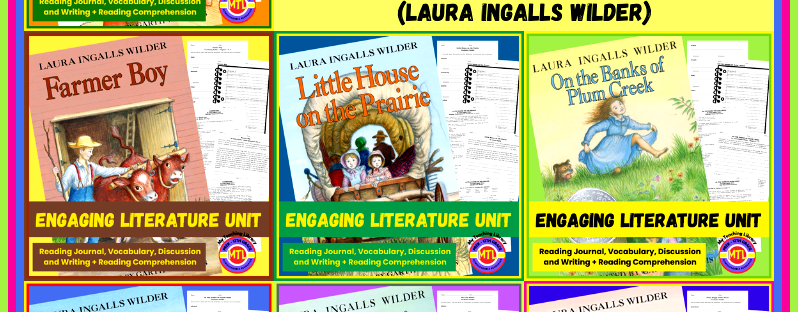
Included in this BUNDLE are full literature units for…

  1. Little House on the Prairie
  2. The Long Winter
  3. Farmer Boy
  4. These Happy Golden Years
  5. Little House in the Big Woods
  6. By the Shores of Silver Lake
  7. On the Banks of Plum Creek

400+ pages in total

Each unit includes:

  • Vocabulary work – Students are asked to find and write a definition, an antonym and a synonym for each word given.
  • Reading journal for every chapter in every book
  • Reading comprehension quizzes (including keys)
  • Essay questions – Many will ask students not only about events in each book but also ask students to relate events to their own lives in some way.
  • Oral discussion questions – Perfect for large or small groups (literature circle) discussions – Great for both Co-ops and one on one parent interaction.

Not sure if you want the entire bundle? Each unit is available for individually purchase, however you’ll save $7.50 when you purchase the bundle! (Unless, of course, you are an All-Access members. Everything is FREE with All-Access!)

Here are the individual units:

  1. Little House on the Prairie Literature Unit | Laura Ingalls Wilder
  2. The Long Winter Literature Unit | Laura Ingalls Wilder
  3. Farmer Boy Literature Unit | Laura Ingalls Wilder
  4. These Happy Golden Years Literature Unit | Laura Ingalls Wilder
  5. On the Banks of Plum Creek Book Literature Unit | Laura Ingalls Wilder
  6. Little House in the Big Woods Literature Unit | Laura Ingalls Wilder
  7. By the Shores of Silver Lake Literature Unit | Laura Ingalls Wilder

Have you been considering getting All-Access? 
Check out what others are saying…

All-Access members do not pay for this or any resource. Become an All-Access member today!

________________________

Get the MOST from My Teaching Library by connecting with us here:
FB Group (PRIVATE GROUP)
FB Page
Instagram
Pinterest
X (formally twitter)
YouTube
Homeschool, Planning

Plan your Homeschool Year like a Pro!

Plan like a pro using this each to follow checklist…

1. Plan & Organize

  • Know your state’s homeschooling requirements and update all necessary documentation. You’ll find requirements for each state here: HSLDA.org
  • Establish goals for your child(ren), academic objectives, personal development, and life skills. I encourage you to engage your child(ren) in this process. Ask for their input regarding desired accomplishments, areas of interest, and subjects requiring further attention.  I have goal planning forms inside our Mega-Planner. If you need short term goal sheets for a child with ADHD, you can find them here.
  • Develop a comprehensive schedule and routine for the first month, including planned breaks. When doing so, know that you should expect to be flexible. The beauty of homeschooling is that life happens and you can adjust!
  • Consider multiple methods, such as thematic units, weekly segments, subject-based planning, or conceptual frameworks. Keeping different methods within your plans will help your child(ren) to stay engaged and excited.
  • Organize curriculum materials and print any required worksheets or planners. Utilize binders or other organizational tools; ensure adequate printer supplies are available. Want school supply recommendations? I’ve got them here!
  • Establish a flexible daily or weekly routine. A flexible mindset is key when homeschooling!
  • Download the Mega-Planner to help get and stay organized.      

2. Prepare Your Learning Environment

  • Declutter and update the homeschool area to create a conducive learning space. Remove unused books, outdated worksheets, and expired supplies from the previous year.
  • Acquire essential school supplies, including writing instruments, notebooks, and art materials.
  • Implement a storage solution for instructional resources and completed student work.
  • Post a visual schedule or morning overview to clarify daily expectations.

3. Gather & Inventory Curriculum

4. Set Up the Academic Calendar

  • Record critical dates that you want to plan around such as holidays, co-op meetings, and field trips. For families homeschooling year-round, advanced planning of breaks and excursions ensures goal attainment. Calendars can be found in our Mega-Planner.
  • Schedule regular planning or “teacher days” to review progress and evaluate the effectiveness of curriculum and methodologies, making adjustments as needed.

5. Foster Enthusiasm in Students

  • Design and implement an engaging activity or tradition for the first day of the homeschool year.
  • Prepare a back-to-school kit with new supplies or a small token to mark the occasion.
  • Discuss goals and interests with each student to tailor learning experiences accordingly.

6. Prepare Yourself as the Instructor

  • Reflect on previous years’ successes and challenges, incorporating feedback from your child(ren) regarding preferred resources, activities, and areas for improvement.
  • Develop a self-care strategy to prevent burnout, prioritizing periodic breaks. This is very important! 😉
  • Join the My Teaching Library fb group for support.

7. Final Steps

  • Create a list of potential field trips and hands-on projects to enrich the curriculum.
    Download your Field Trip Advance Planning Forms here and your child(ren)’s after field trip forms here.
  • (When possible) Prepare meals in advance to facilitate low-stress school days. Also, remember to incorporate recipe planning and cooking within your homeschool plans from time to time. These activities are learning activities! Download our colorful recipe templates to use for planning.
  • Maintain adaptability throughout the year! Remember to stay flexible. Burn out is real and your child(ren) can feel it too. Learning is a journey, not a race!  


My Teaching Library – A teacher and parent recommended, comprehensive site, offering you flexible, child-centered materials for all core subjects PreK-12th grade! With My Teaching Library, YOU are in control. You control what and how you teach your children as well as how you access the resources.

What and how: Instead of a one-size-fits-all curriculum, you’ll have instant access to educational materials designed to give you choices! You select what you want to use, and when you want to use it. Why? Because every child learns at their own pace and through their own unique learning style.

How you access: You decide if you want to purchase resources individually or save by becoming an All-Access member.

What are members saying about My Teaching Library?

 “I’d say My Teaching Library is about saving time and sanity. This is a well-organized site that is just brimming with resources for every grade level and subject…. Everything feels like it’s right there are your fingertips just waiting to be accessed…

You can easily plan your entire homeschool year using just My Teaching Library alone with all the teaching supplies and homeschooling magic you can make! These are the only homeschool educational resources you need – really!… By now, it’s not hard to conclude that I am a huge My Teaching Library fan. I will always be a member because they offer so many great teaching resources for homeschool!”

My Teaching Library…The premier choice for thousands of homeschooling families!   

Homeschool

Online vs Offline Homeschooling: Which is Better?

Make an Informed Decision: Online versus Offline

Regardless of why you chose homeschooling, if you are reading this, you are curious which is the best way to homeschool.

With the ease of today’s digital world combined with the daily demands of life, online homeschooling seems a no brainer, especially given the top reasons why parents say they’ve chosen to use an online program:

– I’m not a teacher.
– I don’t have time to prep and plan.
– I have a job and don’t have time.
– I have other kiddos running around

Hi, I’m Lynda Ackert and I’ve been in education for over 30 years. I’ve taught in public school and was a full-time homeschooling momma (PreK-12th grade). Homeschooling is one of the best decisions I’ve ever made…and I’ve done it all, both online and offline.

I’ve learned a lot…but to truly help YOU see the difference, and not just rely on my experience and opinions, I’d like to present you with facts borne out from research. (I’ve included the sources at the bottom of this page.)

After I present the facts, I’ll share more of my own thoughts.

Should You Use an Online Program or Stay Offline (Using Physical Materials)?

RESEARCH FINDINGS:

Engagement and Focus

Online: The collective research shows that digital media have common features and user practices that can constrain learning. These include diminished concentration, an entertainment mindset, a propensity to multitask, lack of a fixed physical reference point, reduced use of annotation, and less frequent reviewing of what has been read, heard, or viewed,” said linguistics professor Naomi S. Baron, in How We Read Now.

Students tend to associate technology with entertainment and are far less likely to give the material the attention and focus needed. They are more likely to multitask, skim text, and refrain from engaging with the material.

Offline: When students can learn with their own print materials, they focus better and concentrate on what they are doing.

Print-based learning is not as linked with entertainment, contains far fewer distractions, and allows students to physically engage with the material through annotation, writing, and drawing – helping students stay on task.

Deep Understanding & Long-Term Retention

Online: Students learn less and do not retain the materials as well. Research shows that there are less brain connections made using online, digital learning methods. (WOW! This is HUGE!)

Offline: Students learn more using physical materials. Their understandingcomprehension, and retention were higher when reading print than when reading the same text on a screen or even listening to or viewing the material.

Students who read the material in print were also more successful at identifying main ideas, recalling specific details, correctly remembering sequencing, and completing abstract tasks like drawing inferences. Additionally, students of all ages who had read the material in print scored higher on assessments than their peers who had used digital learning!

The physical properties of paper also account in part for its superior effect on learning. The visual geography of paper has memory-linking effects that help students connect what they have read with where they saw it on a page or how far into a book it was.

Using paper in the classroom also aids learning because students can write on, draw on, and annotate their materials. Research done by experts in memory suggests that drawing, in particular, can strongly affect recollection, and is an effective learning tool.

Ownership Equals Self Confidence

Online:  When using online platforms, students are far less invested in their work. They have no tangible ‘products’ that are produced and thus the self-confidence that comes from creating and producing tangible materials isn’t possible.

Offline: When students have a print copy to work with and/or make their own, it helps them feel like they are in charge of their own learning. This increases their self-confidence and their investment in their own journey of learning.

When students have physical, consumable materials, they are more engaged! They can highlight, underline, write notes (physically writing is proven to be superior to typing in retention and making brain connections), cutting, pasting, physically manipulating and creating ‘owned’ masterpieces, projects, essays, etc.

When students write and create, they own their learning, articulate their thinking, and tap into creativity and organizational thinking skills. These student created materials (even their ‘notes’) help students understand what they are working on and encourage them to connect old and new knowledge. (BRAIN CONNECTIONS!) As students physically create artifacts, they visibly represent their thinking, understanding, and skills.

You’ve chosen to homeschool because you want the very best for your child. You and I both know that every child is unique. So, I’m going to be real here…Online programs are made for the masses. Even if the program is self-paced, the actual content can’t be changed. The order and material is set.

If you stay offline and use physical resources (books and printouts), you can tailor the materials to fit your individual child. If they show interest in a specific topic, delve deeper. If a your child isn’t grasping a topic at a given moment, you can elect to move forward (skipping that topic for a bit) and go back later when you feel they are ready. I could go on and on here about life circumstances, abilities, learning styles…but you get the idea.

Moving Past the Daunting Pause – Choosing To Stay Offline
Yes, it can be daunting to be your child’s primary teacher.
The time, the effort, the feelings of inadequacy.
It’s worth it!

Remember three things: 

1.  Homeschooling isn’t an 8 hour a day thing. If your state law requires 8 hours of ‘schooling’ a day, that doesn’t mean you sit down and teach for 8 hours! The typical homeschooling day takes between 2 – 4 hours, 3 to 5 days a week. That’s it! If you have a kindergartener, it probably will only be an hour and that doesn’t have to be all at one sitting.

Adding up educational hours: You can count daily life activities as learning! Here are things that you can record to be educational learning activities: chores, cooking, grocery shopping, gardening, visits to a museum, swim class… you get the idea!

2. Noone will ever know your child, love your child as much as YOU. Ask yourself, how are you going to know, REALLY KNOW, what your child is learning and/or struggling with if you aren’t in the ‘trenches’, taking the time to observe, ask questions, delve into their learning?

Yes, online learning platforms will provide you with reports on skills learned but those reports can’t give you any insight into the ‘whys’ behind the results. Also, these programs (and reports) can never indicate nor assess your child’s ability to think beyond rote learning.

Online Platform Reports Can and Cannot Provide:

They can tell you…
– If your child can recall a facts and choose correct answers from a given set of answers about a reading passage and or video.

– If your child can answer math problems correctly

– What grade level skills your child seems to have “mastered” (…but haev lasting connections been made? Will the skills be retained? Research has shown that students who learn via printed materials score higher overall on mid-year, end-of year, grade level tests.)

What they cannot tell you…
– Why your child is not grasping a concept or recalling facts. Was he rushing through the reading? Did he read the passage fully? Can he read and understand all of the words in a passage? If you are using physical, offline resources and your child isn’t grasping or recalling what is in a passage, you can sit down with your child and delve deeper. Read with him. Ask him questions. Help him make connections he isn’t making.

– What mistakes or misunderstandings are happening causing your child to incorrectly answer math problems. A computer or video program is not able to sit side-by-side to watch your child go through the steps. You can. You can also help guide through asking questions. What is his reasoning?

– If your child can apply, think critically about, or extend the learning beyond the presented material. This requires questions to be asked, discussions to take place, projects to be created. What I mean is this…A online program’s report of your child’s abilities will never be able to tell you if your child can differentiate, organize, or examine the topic further. Can your child successfully appraise, argue, defend a ideas/topics? Can your child develop ideas further, investigate, and construct a way to do so.

What about an ‘online’ teacher? 
Unless you are paying for one-on-one instruction, realize that that online classes have multiple children in each class and are teaching over a ‘zoom-like’ setting. They can’t see everything that is happening, nor can they slow down or speed up based on one child’s (your child’s) needs. Because they have a set program, they can’t stop, delve deeper nor go on extended rabbit trails of learning that your child may benefit greatly from. After classrooms closed during 2020-2021 and were forced to hold classes via zoom, much research has proven the downfalls of this type of learning!

3. Homeschooling is a journey, not a race…and it’s a GIFT you’ll never regret! One of the BEST things I enjoyed as a homeschooling momma was the amount of quality time I had with my child. If you choose to use physical materials, stay offline and remain your child’s primary teacher, that time is precious quality time. Fleeting time. Time you will cherish in years to come!

You’re there at every twist and turn, witnessing and walking with your child through every aspect of the journey. As I mentioned previously, I did choose to use online programs a couple times. One year I chose a video driven curriculum and once I used an online classroom with a live teacher. Not choices I would ever make again.

As a homeschooling parent, when I was fully engaged, there was rarely a day that went by that I didn’t have the opportunity to encourage my child when he faced frustration, model appropriate character-building behaviors, or just listen, truly listen to my child’s heart when he needed it.

Embrace the Journey!

~ Lynda

Do you have questions about how you can homeschool using My Teaching Library?

Learn more:

What Makes My Teaching Library Different?

Sample Previews of My Teaching Library Products!

My Teaching Library All-Access Membership

interactive learning, Spring

Creative Spring Activities for Homeschoolers

Spring is such a wonderful time to embrace homeschooling! It’s a season of renewal. A season offering times of exploration. A time to incorporate hands-on, creative learning experiences! In this post, I hope to awaken some ideas for you. I also want to suggest some ready-to-use resources that you can easily incorporate into fun, creative Spring learning!

Nature studies are a wonderful addition to any homeschool curriculum! They help foster curiosity, environmental awareness, and a love for the natural world. Here are some ideas and resources to incorporate. These resources will encourage your kids to document their surroundings—sketching plants, animals, or landscapes they see….and much, much more! There is something for ALL-AGES!!

ABC Nature Hunt

A FUN nature hunt that can be used by an individual student, a group of students or an entire family!

Life Cycle of a Frog | Differentiated

This 1st / 2nd Grade Science resource provides postershandouts and center activities to help students learn about the life cycle of a frog! Seven stages are shown and pages come in color and b/w. Easy to use and differentiated (Based on student ability – Easiest: Color the life cycle / Medium: Color, cut and paste the life cycle / Hardest: Draw the life cycle)

Life Cycle of a Flower| Science Student Created Book

This cross-curricular (Science Literacy – Writing ) product will have students creating their very own mini-books detailing the life cycle of a flower! Knowledge students will learn: Students will learn what flowers (plants) need to live and grow (soil, water, sun, air) and how a planted seed becomes a sprout, then a seedling and then a beautiful flower. Students will:— read the text — draw a picture — write (copy) the written text— write (copy) the written text

Life Cycle of a Butterfly | Science Student Created Book

This Science – Language Arts resource with have students creating their very own mini-book of the life cycle of a butterfly! Knowledge students will learn: The book will begin with the butterfly laying an egg on a leaf and continue as a caterpillar begins to grow in the egg, hatches and begins to eat. Students will learn what the caterpillar eats and that it is a type of larva. As the book progresses, students will write about the caterpillar building a cocoon and it’s life as a pupa (and a chrysalis) before emerging as a beautiful butterfly! On each page, students will … read the text, draw a picture and then write (copy) the written text.

Mushroom Bundle | Studying Fungi

My Teaching Library has bundled 5 MUSHROOM products to help you SAVE and have a variety of fantastic classroom resources to help you teach.
– If you want to give your student(s) a fun, research-based unit study, this bundle is for you!
– If you teach Science for 6th-12th grades, this bundle is for you!
– If you teach an outdoor nature-based class, this bundle is for you!

North American Birds of Prey Research / Report Pages

Birds of Prey’ is a 41 page download and offers pages specifically designed to help students organize and present research reports for each bird. Also included are several ‘blank’ pages for students to use when researching other birds as well as pages to add additional information to any report.

    5 Paragraph Writing Guide | Nature-Themed Local Birds

    Easy-to-use, step-by-step, print-and-go guide for students to use as they learn to write a 5-paragraph essay! This nature-themed resource has a local bird focus and guides students as they research, observe and write about one bird species that lives in their local area.

    This 3-page resource outlines paragraph by paragraph what to include and gives space for students to write detailed notes.

    What will students learn and observe about a bird species before they begin writing?
    – where the bird geographically lives
    – habitat(s) where they are most likely found
    – physical characteristics (coloring, markings, size, bill, feet)
    – diet (herbivore, carnivore, omnivore) and where/how they find/gather their food
    – predators and self-protection
    – interesting facts

    Plus, this guide will encourage students to reflect on what they have learned.

    Once completed, students will be able to take the guide and their notes and write amazing 5-paragraph essays!

    Use once as one assignment for one bird of their choice or use again and again to create an entire collection of essays on local birds. Regardless of where you live, these pages will have students observing and learning about local birds.

    Let’s Learn about Plants | Science for 1st and 2nd Grades

    Let’s Learn about Plants is a Science resource that can be used in conjunction with your own curriculum or as a separate – individual unit! Students will be actively learning as the cut, color, paste, write and learn! They will learn about the parts of a plant and the life cycle!

    Botany – Plants | Interactive Learning

    Give students an engaging way to learn about plants with this interactive, project based resource. Designed to be used for multiple ages and grades, 2nd-6th grades, students will learn about plants:
    – classification
    – photosynthesis
    – the plant cell
    – parts of the plant
    – things plants need to grow
    – the life cycle of a plant
     – plant leaves
     – different types of plants (non-flowering, carnivorous, poisonous)

    These are just a few ideas to get you started! My Teaching Library has many other NATURE-THEMED resources that you’ll find on MyTeachingLibrary.com!


    All-Access members do NOT pay for ANY OF THE ABOVE RESORUCES or ANY resource on My Teaching Library!
    Become an All-Access member today!

    ________________________

    Get the MOST from My Teaching Library by connecting with us here:
    FB Group (PRIVATE GROUP)
    FB Page
    Instagram
    Pinterest
    X (formally twitter)
    YouTube
    2nd Grade, 3rd Grade, 4th Grade, Book Units, Elementary, Guided Reading, Literature Connections, Reading, Reading Comprehension, Reading Instruction

    12 Interactive Book Units for Young Readers

    I want to discuss reading. Specifically, moving beyond merely reading words on the pages of a book.

    When our children are young and we read to them, reading time is special and children begin to show their love of books. They’ll bring books to us saying, “Read to me!”. 

    At such an early age, they aren’t necessarily loving the stories as much as cherishing the relationship between parent and child, the time spent together and the interactions that occur while we read to them. Perhaps you change your voice for different characters, you ask them questions and make reading a fun interactive parent child time….and during that process, they are learning about the world around them. 

    …and then comes the time that they begin to read those same stories themselves.

    Once children are tasked with reading those written words themselves, many lose that initial love for the written story as they have to sound out letters, say the words and put sentences together. Now, of course, it is essential that they do these things! They need to learn those letter sounds, the words and how sentences are formed…but often, during the process they begin to lose their initial love of the written word…the stories that are being told.

    So, how can we nurture the love of books during this process…and beyond? How can we implement reading strategies and activities that will help our children ‘get into’ and ‘stay into’ the story? How do the inspire our children to delve deep into the stories being told, the thoughts of the characters, the differing points of view, the role of illustrations…to find whimsy, excitement, adventure! 

    To help you with this task, I’ve created 12 book units for (1st – 4th) elementary students that will help! These units are fun and engaging and will give you, the parent teacher, specific guidance while providing fun, interactive activities for your child(ren). 

    Have multiple children just a couple grades apart, you’ll be able to use these units to teach them together. Have an older child that could benefit from teaching their younger sibling(s)? Have them use these resources with their younger sibling(s). 

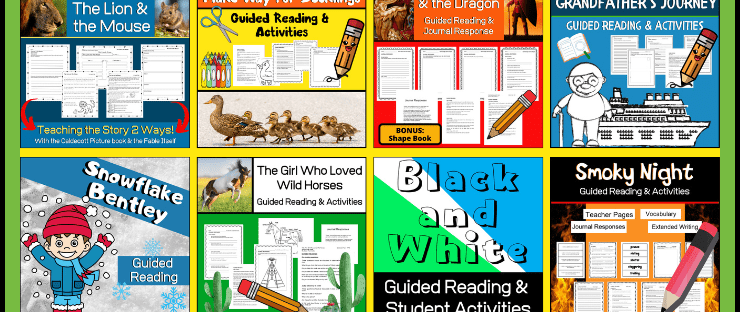
    I’ve placed all of these 12 units together in an easy to access: Literature Bundle. Every book included in this bundle is a Caldecott award winning book! 

    This BUNDLE offers 12 fun and engaging book units, all offering guided reading questions and student activities designed to increase student interest, test student comprehension, help students use critical thinking skills and explore their creativity.

    Included book units:

    What can you expect in each of these units? Let me give you one example of what you’ll find in them…

    In “The Girl Who Loved Wild Horses“, you’ll find:

    For the Teacher: Suggested Pre-ReadingAbout the CoverAfter Reading and About the Artwork questions. What type of questions can you expect? Here are just a few examples of the questions you’ll find… 

    • Pre-reading – What do you think this book will be about? Do you like horses? Why or why not? 
    • After reading – Do you think the storm was just a bad dream or did it really happen? Talk about a bad dream you’ve had and what you did to make yourself feel better. Do you think this story could be true? 
    • About the art – What do the pictures tell you about the time in which the story takes place? Which picture is your favorite?

    For the Students:

    • Worksheet for students to answer questions from the story (comprehension and critical thinking)
    • Worksheets to produce questions both while reading and after reading (to engage both during and after)
    • 3 Art responses (emotional and creative response)
    • A poster of horse and label the parts worksheet (going beyond the story)
    • A Teepee shape book to create a book report, a summary; to record and define unfamiliar vocabulary; use to create a poem inspired by the book (from study skills to creative expression)

    Here are just a few preview images from a few of the included units:

    Not an All-Access member? When you purchase the Literature Bundle, you’ll save 20% off purchasing each individually! 

    Need the books for the above units? 
    If you do not already have these books, you can go to your local library to borrow them or you can purchase them and have them delivered to your door. The following links will take you to view and purchase on Amazon. My Teaching Library is an Amazon associate:


    Join My Teaching Library on social media…

    FB Group (PRIVATE GROUP)
    FB Page
    Pinterest
    X (formally twitter)
    YouTube

    Uncategorized

    Unlocking Your Child’s Success: Beyond the Curriculum

    Giving your child the BEST chance to succeedKey’s to Unlock Success!

    As parents and teachers, we want to give our children the very best education possible. We want them to succeed. We spend hours (sometimes years) searching for the perfect curriculum and often spend a lot of money on what we believe will give them the greatest opportunity to learn and succeed.

    …but is it all about the curriculum?

    Going Beyond the Curriculum

    This may seem a little crazy from someone who creates and sells curriculum to tell you that it really isn’t the curriculum that matters. There is much more at play than just choosing the right curriculum and whether the information in the curriculum will actually ‘stick’ …Will your child retain the information?

    I want to introduce you to a term you may (or may not) have heard of…Brain-Based Learning.

    Brain-Based Learning

    I could probably write many lengthy posts on brain-based learning, but I don’t believe you need to get too deep into the science of it all to be able to help your child get the very most out of their learning, to begin retaining the information they are learning and to have the very best chance to succeed.

    Here are some key points:

    Health
    I’m sure you are already very aware of this first part, but I since I’m writing this article, I need to include it…Regardless of a student’s age, they need to be well rested, eat good, nutritional meals and given ample opportunities to ‘use’ their bodies throughout the day. Students need a lot of physical activity, movement, stretch breaks, etc. to be (and stay) engaged with their curriculum.  

    Attitude
    A student’s attitude and emotional state during learning is vital to learning and retaining what is learned. Positive affirmations and limited criticism will help a child’s self-esteem which will affect their ability to learn. Give critiques not criticisms. Give positive, constructive critiques by stating what is done well, recognizing improvements, being specific in the area being address (not broad), express appreciation and end on a positive note. Be your child’s cheerleader and encourage positive, growth mindset!

    Senses
    During the learning process, the more senses one uses, the more “brain connections” that can and will be made! The brain processes information through multiple senses so incorporating visual, auditory and kinesthetic elements are key. It can be very easy to sit our children in front of a computer or hand them a workbook but always ask yourself, “Are there a good variety of visual, auditory and kinesthetic activities involved?” If not, look for ways to add them!

    Also, what about the learning environment and your child’s senses? Can your child’s environment make a difference in successful learning? For many children, the answer is yes! For some, light, sound and temperature of the learning space can be a factor. So, don’t forget to consider all aspects of your child’s learning environment.

    Relevant
    Making what a student is learning relevant to their lives and interests will increase motivation, engagement and long-term retention. Connecting new information to existing knowledge and experiences help the brain make meaningful and lasting connections. Whenever (and however) you can, get your child to apply what they are learning to relevant, real-life situations. In other words, how can they think about or apply what they are learning to their ‘real life’?

    Connections
    When I write the word ‘connections’ here, I’m referring to making brain-connections through connecting with others around them. When a child connects with others, while learning, or after learning (sharing what have learned), they are helping their mind connect and create new pathways within the brain. This can be through cooperative learning activities, reading to others (siblings, parent, grandparents), teaching or presenting what they’ve learned, etc. If you are teaching a single child and they do not have the opportunity to work in a small group or peer teach, get creative! Have them create a ‘teaching’ video or perhaps puzzles that others could use.

    Layered-Learning
    This is vital! Not familiar with layered learning? Even if you do everything above, for your child to get the very most from their education, layered-learning is a must! Read more on My Teaching Library here: Layered Learning


    Thank you for visiting and reading this post from
    My Teaching Library!

    My Teaching Library is a family-owned business started by a mom (and now grandma) with over 30 years of experience in the field of education. Having worked as a public-school teacher prior to becoming a full-time homeshcooling mom, Lynda has experience from both perspectives and is dedicated to creating and sharing with YOU the very best resources to help you teach your children. In an effort to help you SAVE TIME and MONEY as a teacher and homeschooling parent.

    To save you time, she has created and gathered thousands of resources now available to you for instant download all on one site, MyTeachingLibrary.com. It is also important to her that children are taught as the unique learners that they areLearn the My Teaching Library difference.

    To save you money, she offers two ALL-ACCESS membership plans. Members do not pay listed prices, instead they only pay for membership!

    Join Lynda and My Teaching Library on social media…
    FB Group
    FB Page
    Pinterest
    X (formally twitter)
    YouTube

    Teaching

    Help!! My Child is not Retaining Information!

    Time and time again, I hear parents saying…

    My child isn’t retaining the information she is reading/learning.

    HELP! I don’t know how to help my child. He does his work but can’t remember what he is learning!

    Have you ever said or felt in a similar way? Perhaps you have a child who might remember something for a week or a month but then it’s simply…poof...gone?!

    If so, you aren’t alone! There is a solution and it’s actually quite simple…

    It’s called LAYERED LEARNING and here is a quick visual…

    Regardless of the curriculum you are using, everything begins in the 1st layer: basic knowledge.

    I’m going to be honest here and my beliefs come from 30+ years of experience in education. I’ve seen it as a public-school teacher and then as a homeschooling momma that used multiple ‘made for the masses’ curriculum…Most curriculum stops at the 1st level – basic knowledge!

    My heart hurts for so many parents who don’t realize that the curriculum they have spent hundreds (if not thousands) of dollars on basically spews information, has the students answer a few questions and moves on to the next section.

    I’ve also seen a huge draw to online learning in the last decade simply because parents do not feel equipped to be ‘the teacher.’

    First, let me put that to rest…YOU are equipped to be your child’s teacher!!

    I will never say there isn’t a place for online classes. My son took some wonderful online courses. However, what I found 9 times out of 10 was a lack of anything beyond level 1: basic knowledge. If I wanted my son to go beyond, I needed to get into the trenches and help him advance to the next two layers!

    What are those next two layers:

    • 2nd layer: application
    • 3rd layer: critical thinking

    So, what do these next two layers really look like? Have you ever heard of Blooms taxonomy? Whether you have or haven’t, isn’t really important, but the taxonomy is!

    Here is another visual for you…

    Regardless of what curriculum you are using, whether it is from My Teaching Library, another provider or a mix of both, to help your child get the very most out of their learning, make sure to include the layers of learning to your lesson plans!

    You can do more research on Bloom’s taxonomy and how to help your child get the very most from their curriculum through doing a Google search of: Bloom’s taxonomy.

    However, if you don’t have the time or simply want something now, here are two resources that truly is all you need…

    Layered Learning Poster

    Layered learning is vital for student retention of information and full comprehension of knowledge. This poster has been designed to help you create the very best learning experience for your students.

    Download, print and keep handy when preparing all of your lesson plans.

    Layered Learning ACTIVITIES Poster

    Layered learning is vital for student retention of information and full comprehension of knowledge. This activities poster has been designed to help you create the very best learning experience for your students by giving you activity ideas for the varies layers of learning!!

    Download, print and keep handy when preparing all of your lesson plans.

    Both of these posters, Layered Learning Poster and Layered Learning Activities Poster have been created so that you may download, print and keep them with you as you are planning your lessons.

    If and when you do, you will see a huge difference
    in your child’s retention of material as well as
    witness their ability to think critically!


    Thank you for visiting and reading this post from My Teaching Library!

    My Teaching Library is a family-owned business started by a mom (and now grandma) with over 30 years of experience in the field of education. Having worked as a public-school teacher prior to becoming a full-time homeshcooling mom, Lynda has experience from both perspectives and is dedicated to creating and sharing with YOU the very best resources to help you teach your children. In an effort to help you SAVE TIME and MONEY as a teacher and homeschooling parent.

    To save you time, she has created and gathered thousands of resources now available to you for instant download all on one site, MyTeachingLibrary.com. It is also important to her that children are taught as the unique learners that they areLearn the My Teaching Library difference.

    To save you money, she offers two ALL-ACCESS membership plans. Members do not pay listed prices, instead they only pay for membership!

    Join Lynda and My Teaching Library on social media…
    FB Group
    FB Page
    Pinterest
    X (formally twitter)
    YouTube

    Kindergarten, PreK, Reading Instruction

    Learning to Read: A “How To” Progression from Letters to CVC Words (Part 1)

    Reading is a crucial skill that begins by mastering the alphabet. However, as students progress, they encounter another milestone in their journey – the transition from recognizing individual letters to seamlessly blending consonant-vowel-consonant (CVC) words. This is an essential step that helps them decode and read more complex words. In this series, I will share a step-by-step guide on how you can help your students make this transition effectively.

    In this blog post, part 1, I’m addressing the skill of mastering letter recognition.

    Learning to Recognize Letters

    Students must be able to recognize individual letters before introducing them to mixing CVC words and thus beginning to read.

    • Students should be able to recognize both capital and lowercase letters in order to be proficient in letter recognition.
    • Identify the various print fonts (consider the numerous ways to write an or g).
    • Have rapid and accurate sight letter recognition.

    Some practice ideas if a student isn’t recognizing at least half of the alphabet’s letters…Reinforce letter recognition with fun activities including worksheets, flashcards, and alphabet games.

    Need resources to help teach letter recognition? My Teaching Library has a great variety…

    Go to: ABCS TRACE AND COLOR 
    Free to All-Access Members
    Non-Members will find listed price on product page

    Go to: LETTER LAPBOOKS | A-Z
    Free to All-Access Members
    Non-Members will find listed price on product page

    Go to: LETTER LEARNING A-Z CAPITAL LETTERS | INTERACTIVE COLOR, CUT AND PASTE
    Free to All-Access Members
    Non-Members will find listed price on product page

    Go to: MORNING WORK FOR KINDERGARTEN | 1ST SEMESTER
    Free to All-Access Members
    Non-Members will find listed price on product page

    Go to: MORNING WORK FOR KINDERGARTEN | 2ND SEMESTER
    Free to All-Access Members
    Non-Members will find listed price on product page

    It’s crucial to understand that letter recognition is just one component of the process of enabling students to blend. Acknowledging the need for students to recognize a minimum of 50% of the alphabet’s letters before progressing is essential. This criterion is vital because students could potentially advance to blending at a faster pace than anticipated. Once students grasp letters and their respective sounds (for example, m, a, p, s, t), they are ready to begin blending!

    As you practice letter recognition, it’s important to introduce the sounds associated with each letter. As students learn each letter, say when they are completing a lapbook for each letter or working on a letter page, you can you can say, “The letter b makes the /b/ sound heard at the beginning of ball or big.”

    Encourage the students to repeat after you or complete the sentence, such as, “this is the letter __ ‘b!It makes the __ ‘/b/’ sound”. This brief daily exercise will help your students learn both the letter names and sounds simultaneously!

    It is also always helpful to use multisensory approaches, such as associating sounds with gestures or using tactile materials, to enhance understanding!

    Continue reading…PART 2!


    Want to view the TOP SUGGESTED RESOURCES for PreK and Kindergarten students? Click the button below…


    My Teaching Library has thousands of digital downloads ready to use!
    Curriculum, Units, Worksheets, Posters, Activities…and more.

    On My Teaching Library, YOU CHOOSE!

    Purchase resources individually or…
    Pay ONE PRICE and get ALL the PRINTABLES you need in ONE PLACE with ALL-ACCESS