Educational Resources for Teachers and Homeschool Families
Author: My Teaching Library
My Teaching Library is an award-winning site for teachers and homeschooling families! MTL provides quality, affordable resources for PreK-12th grade. All materials are downloadable thus instantly accessible upon purchase. In addition to purchase every resource individually, customers may purchase an ALL ACCESS membership making our resources even more affordable!
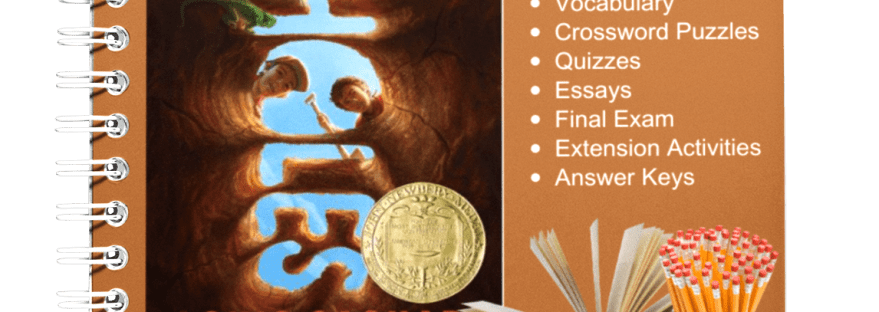
This is an in-depth novel study of Louis Sachar’s Holes in which students will delve into literary elements of the book, analyze various topics and themes, write arguments and opinions, conduct research and more! This unit is designed for advanced 6th-8th graders and High School students.
Sections of this 112 page study include: – Summary – Metaphors and Similes – Irony – Imagery – Fairy Tale Elements – Literary Elements Lesson Plans – About the Author – Key Aspects – Part 1 (Chapters 1-9) – Part 2 (Chapters 10-20) – Part 3 (Chapters 21-30) – Part 4 (Chapters 31-40) – Part 5 (Chapters 41-50) Final Essays – Essay Suggested Questions – Grading Rubric – Final Essay Answer Key Final Exam – Answer Key Optional Extension Activities
Thank you for visiting and reading this post from My Teaching Library!
My Teaching Library is a family-owned business started by a mom (and now grandma) with over 30 years of experience in the field of education. Having worked as a public-school teacher prior to becoming a full-time homeshcooling mom, Lynda has experience from both perspectives and is dedicated to creating and sharing with YOU the very best resources to help you teach your children. In an effort to help you SAVE TIME and MONEY as a teacher and homeschooling parent.
To save you time, she has created and gathered thousands of resources now available to you for instant download all on one site, MyTeachingLibrary.com. It is also important to her that children are taught as the unique learners that they are. Learn the My Teaching Library difference.
To save you money, she offers two ALL-ACCESS membership plans. Members do not pay listed prices, instead they only pay for membership!
“My child isn’t retaining the information she is reading/learning.”
“HELP! I don’t know how to help my child. He does his work but can’t remember what he is learning!“
Have you ever said or felt in a similar way? Perhaps you have a child who might remember something for a week or a month but then it’s simply…poof...gone?!
If so, you aren’t alone! There is a solution and it’s actually quite simple…
It’s called LAYERED LEARNING and here is a quick visual…
Regardless of the curriculum you are using, everything begins in the 1st layer: basic knowledge.
I’m going to be honest here and my beliefs come from 30+ years of experience in education. I’ve seen it as a public-school teacher and then as a homeschooling momma that used multiple ‘made for the masses’ curriculum…Most curriculum stops at the 1st level – basic knowledge!
My heart hurts for so many parents who don’t realize that the curriculum they have spent hundreds (if not thousands) of dollars on basically spews information, has the students answer a few questions and moves on to the next section.
I’ve also seen a huge draw to online learning in the last decade simply because parents do not feel equipped to be ‘the teacher.’
First, let me put that to rest…YOU are equipped to be your child’s teacher!!
I will never say there isn’t a place for online classes. My son took some wonderful online courses. However, what I found 9 times out of 10 was a lack of anything beyond level 1: basic knowledge. If I wanted my son to go beyond, I needed to get into the trenches and help him advance to the next two layers!
What are those next two layers:
2nd layer: application
3rd layer: critical thinking
So, what do these next two layers really look like? Have you ever heard of Blooms taxonomy? Whether you have or haven’t, isn’t really important, but the taxonomy is!
Here is another visual for you…
Regardless of what curriculum you are using, whether it is from My Teaching Library, another provider or a mix of both, to help your child get the very most out of their learning, make sure to include the layers of learning to your lesson plans!
You can do more research on Bloom’s taxonomy and how to help your child get the very most from their curriculum through doing a Google search of: Bloom’s taxonomy.
However, if you don’t have the time or simply want something now, here are two resources that truly is all you need…
Layered learning is vital for student retention of information and full comprehension of knowledge. This poster has been designed to help you create the very best learning experience for your students.
Download, print and keep handy when preparing all of your lesson plans.
Layered learning is vital for student retention of information and full comprehension of knowledge. This activities poster has been designed to help you create the very best learning experience for your students by giving you activity ideas for the varies layers of learning!!
Download, print and keep handy when preparing all of your lesson plans.
If and when you do, you will see a huge difference in your child’s retention of material as well as witness their ability to think critically!
Thank you for visiting and reading this post from My Teaching Library!
My Teaching Library is a family-owned business started by a mom (and now grandma) with over 30 years of experience in the field of education. Having worked as a public-school teacher prior to becoming a full-time homeshcooling mom, Lynda has experience from both perspectives and is dedicated to creating and sharing with YOU the very best resources to help you teach your children. In an effort to help you SAVE TIME and MONEY as a teacher and homeschooling parent.
To save you time, she has created and gathered thousands of resources now available to you for instant download all on one site, MyTeachingLibrary.com. It is also important to her that children are taught as the unique learners that they are. Learn the My Teaching Library difference.
To save you money, she offers two ALL-ACCESS membership plans. Members do not pay listed prices, instead they only pay for membership!
My Teaching Library – Designed with the belief that every child is unique; every family has its own schedule and homeschooling does not have to cost a fortune.
EVERY CHILD AND FAMILY IS UNIQUE…HOME EDUCATION SHOULD BE THE SAME!
My Teaching Library is an award-winning, parent-recommended, comprehensive site, offering you flexible, child-centered materials for all core subjects PreK-12th grade which will allow you to create an educational experience designed just for your children and family!
As a parent, you will have the ability to select what you want to use, and when you want to use it, all based on your child(ren)’s abilities and skill levels while considering what works for your unique situation.
How is My Teaching Library different?
NOT PLACING YOUR CHILDREN IN A BOX:
Instead of a one-size-fits-all boxed curriculum, you will find a variety of educational materials designed to give you and your child(ren) choices. Because every child is unique, they learn at different rates and may have different learning styles!
Boxed (prepared, step by step, created for the masses) curriculum sets simply are not designed for the individual but are based on whatever the creator believes will be the pace and learning style of the children using them. What may seem to be a simpler, easier option for parents, (a boxed, set curriculum), can easily end up as an expensive investment that is thrown to the side and never completed because it just ‘wasn’t right’ for their child(ren).
My Teaching Library puts an end to the purchasing of expensive curriculum designed for the masses. On My Teaching Library, you will find materials that exemplify excellence while providing a fun, varied learning journey. One that is parent-chosen and led.
MEETING YOUR CHILDREN WHERE THEY ARE:
Instead of a ‘grade-level’ only focus, a greater focus is placed on teaching needed and required skills and concepts as each child progresses through their educational journey. On My Teaching Library, you’ll easily be able to navigate from the home page to a list of skills and concepts divided by the grade(s) in which they are typically taught as a guide.
These lists will guide you as the parent, to take full control of your child(ren)’s educational journey by choosing what is right for them at any given time.
If your child is excelling in a particular subject, why hold them to a boxed, grade-level curriculum where boredom sets in and the love for learning dies? If your child is not at grade-level in a subject, why set them up only to struggle to complete a grade-level curriculum only leading to frustration and tears?
These skills and concept lists are divided into the following categories to act as your guide:
PreK-Kindergarten
1st – 3rd grades
4th – 5th grades
6th-8th grades
9th-12th grades
You will also see an amazing array of “top suggested resources” ready to use, plus there are thousands of additional resources available to you on the site that can be easily found through the online catalog.
MAKING HOME EDUCATION AFFORDABLE:
Instead of paying for expensive curriculum sets or paying piece by piece for individual products from different providers, My Teaching Library offers an unlimited, very affordable, All-Access family membership. All-Access members have unlimited free access and a license to use everything on the site for the term of their membership. There are two membership plans available: annual and lifetime!
GIVING YOU INSTANT ACCESS:
All materials are same-day accessible! That is because everything is digital. You simply need to download, print and use it. No paying for shipping or waiting for materials to arrive. Whether you are looking for a full year’s worth of materials or want to add a fun, same-day, out-of-the-box, interest-driven lesson, you have everything at your fingertips instantly!
READ WHAT MEMBERS ARE SAYING:
“I personally love the fact I can find everything I need to make my homeschool journey easier right here.” Sharing Life’s Moments
“Thanks MyTeachingLibrary.com for compiling such an amazing amount of material!” Renaissance Mama
“As a homeschool mom of five kids (ranging in ages from 4-13), I am always on the lookout for curriculum or resources that will make my life easier and my planning quicker. Enter: My Teaching Library!” My Full Heart
“What we love about this program: It is so incredibly flexible! I would say this is the perfect site for educational resources simply because there is so much available on it!” Jenny
In part 1 of this series, I stated a pretty obvious fact…That children must be able to recognize individual letters as the first part of learning to read. However, you also learned that while teaching children letter names, you can (and should) introduce them to the sound each letter makes.
Here, in part 2, I’ll discuss progressing forward to CVC words.
What are CVC words?
It’s important to emphasize the significance of CVC words in early reading education. These three-letter words, comprised of a consonant, a vowel, and another consonant, are pivotal in introducing blending sounds and decoding words to young learners. Mastery of CVC words is essential for the development of phonemic awareness, a fundamental skill for achieving reading success.
Remember, as you taught children to recognize letters, you also taught them to recognize the sound each letter makes. Once they know the letters and sounds, progressing to CVC words is the next step!
To practice blending CVC words effectively, it’s essential to model the process by pointing to each letter and articulating its sound. For example, for the word “cat”. First, say the word. Then, simply start with “c” and make the sound. Next, add the “a” sound followed by the “t” sound. Point to each letter in the word as you make the sound. Once you make each sound separately, say them (blending together) as you once again say the word.
One effective technique that some love to use when teaching CVC words…Placing dots underneath each letter to provide a tactile reference for students. Begin by repeating the process 2-3 times, gradually increasing the pace and seamlessly blending the sounds together until the word is formed.
Following this, encourage students to participate alongside you and eventually attempt the exercise independently. As a beneficial warm-up, start with oral blending before progressing to using actual words on a blending line. With consistent modeling and ample practice, students will develop the ability to independently blend CVC words.
My Teaching Library has a comprehensive bundle designed just for students who are ready to begin learning and practicing CVC words…
Using this CVC BUNDLE, students will color, trace, write, cut, and glue as they learn and read CVC words!
How to Progress from Letters to CVC Words
Moving from learning individual letters to blending CVC (consonant-vowel-consonant) words is a pivotal milestone in a child’s reading journey. It signifies their transition from recognizing basic phonemes to forming and pronouncing simple words. This phase can be enriched by integrating various engaging activities, interactive games, and providing access to straightforward reading materials. Through a harmonious blend of these approaches, educators and parents can effectively steer young learners towards achieving reading success. Furthermore, cultivating patience, offering consistent encouragement, and fostering a sense of joy in the learning process will lay a sturdy foundation for their future literacy endeavors!
Want to view the TOP SUGGESTED RESOURCES for PreK and Kindergarten students? Click the button below…
Reading is a crucial skill that begins by mastering the alphabet. However, as students progress, they encounter another milestone in their journey – the transition from recognizing individual letters to seamlessly blending consonant-vowel-consonant (CVC) words. This is an essential step that helps them decode and read more complex words. In this series, I will share a step-by-step guide on how you can help your students make this transition effectively.
In this blog post, part 1, I’m addressing the skill of mastering letter recognition.
Learning to Recognize Letters
Students must be able to recognize individual letters before introducing them to mixing CVC words and thus beginning to read.
Students should be able to recognize both capital and lowercase letters in order to be proficient in letter recognition.
Identify the various print fonts (consider the numerous ways to write an or g).
Have rapid and accurate sight letter recognition.
Some practice ideas if a student isn’t recognizing at least half of the alphabet’s letters…Reinforce letter recognition with fun activities including worksheets, flashcards, and alphabet games.
Need resources to help teach letter recognition? My Teaching Library has a great variety…
It’s crucial to understand that letter recognition is just one component of the process of enabling students to blend. Acknowledging the need for students to recognize a minimum of 50% of the alphabet’s letters before progressing is essential. This criterion is vital because students could potentially advance to blending at a faster pace than anticipated. Once students grasp letters and their respective sounds (for example, m, a, p, s, t), they are ready to begin blending!
As you practice letter recognition, it’s important to introduce the sounds associated with each letter. As students learn each letter, say when they are completing a lapbook for each letter or working on a letter page, you can you can say, “The letter b makes the /b/ sound heard at the beginning of ball or big.”
Encourage the students to repeat after you or complete the sentence, such as, “this is the letter __ ‘b!‘ It makes the __ ‘/b/’ sound”. This brief daily exercise will help your students learn both the letter names and sounds simultaneously!
It is also always helpful to use multisensory approaches, such as associating sounds with gestures or using tactile materials, to enhance understanding!
Just preheat the toaster oven or real oven, lay out a graham cracker. Break up your chocolate bunnies and place a few of the pieces on top of the graham cracker. Top with a peep and pop it in the oven.
Bake/broil for a few minutes until the tops are a little browned, then smoosh it with another cracker and EAT!
Simple, delicious, and the kids love them!
Looking for some SPRING RESOURCES? Check out these:
Every year, we celebrate Earth day during the month of April. To help teach students about why and how to care for our planet, here are some great resources from My Teaching Library…
Earth Day Activities for 2nd – 4th Grades – This Earth Day product includes a large number of activities for 2nd, 3rd and 4th grades for Language Arts and Science! It includes: – A COMPLETE Lapbooking unit – A VARIETY of Language arts activities including vocabulary work (Earth, recycle, reuse, reduce, conserve, resources, water, land, air, awareness, environment, clean, responsible, renewable, energy, natural) ; Mini-Books to create ; Reading comprehension ; Earth Day similes ; Poetry creation and more! – Science Activities such as materials categorizing and sorting – Answer Keys
Earth Day Word Search Puzzles – Why word puzzles? Studies have shown that word search and other word puzzles can help improve memory, focus, vocabulary, word recognition, pattern recognition, and overall mental acuity!
Earth Day Mazes | Puzzles for the Mind – Why mazes? A maze might just look like a fun way to pass time, but they’re actually a valuable learning tool for children. Here’s why: -For children, completing mazes is a great way to boost their problem solving skills. -Solving mazes also boosts their patience and persistence and teaches them about the rewards of work. -Mazes can also help improve a child’s cognitive thought processes. -Solving mazes are wonderful for improving hand-eye coordination. -Concentrating on a maze also helps with memory too
Recycling Survey | Math Activity – A fun Math graphing activity that encompasses recycling! Use it as an activity when you want students to practice using tally marks and graphing or use it as an Earth Day activity.
What are the best programs to use (answered in this article)
There are three different types of programs to choose from when homeschooling. They are:
Using prepared, boxed curriculum created for the masses
Using online, learning platforms
Using skill-based and/or unit/theme based printable, teaching materials
What the best program is for you all depends on what works best for you and your child. However, there are some huge considerations to think about.
I’ll now cover the pros and cons of each:
Using Prepared, boxed curriculum created for the masses:
To ‘standardize’ education, our school systems have long adopted boxed curriculum. These programs all are based on grade-level skills and concepts, but they also change as states adopt ever changing standards and methods of teaching.
Pros of prepared, boxed curriculum:
Day to Day lessons are all created and given for the entire year. (This doesn’t mean there is no prep.)
Parents purchase having a sense of relief to have an ‘open and go’ curriculum (especially when they don’t trust themselves fully yet in being able to provide what is needed.)
Cons of prepared, boxed curriculum:
Lessons are not designed to meet your child where they are. Nor do they take into account their learning styles and preferences (and how those preferences can change).
There is no room (time) given for teachable moments or extended learning when a student shows an interest to dive deeper into a specific topic or interest.
Almost always requires extensive prep, even though they are advertised as open and go. Typically, the older the child, the more teacher prep will be required.
They can be very expensive. Prepared, boxed curriculum can be extremely expensive and all too often parents end up throwing out a good portion of it.
Parents will need to keep records.
Students often get bored and frustrated easily
Parents feel defeated when their children aren’t performing as they think they should based on what is given.
I first began using prepared, boxed curriculum in public schools. It was what I was given and expected to use. Even though these ‘open and go’ programs were created to be step by step, they still required me to do a lot of prep work. Plus, I always needed to find supplements to fill in the gaps to help students not quite ready for the material or for those that already knew the material.
Using online platforms:
Online platforms have been around and growing in popularity for years but really took off during the corona virus pandemic. They too are based on grade-level skills and concepts just like prepared, boxed curriculum, but are typically designed to move students along as they demonstrate that a specific skills or concept has been learned.
Pros of online platform curriculum:
Typically, easy to use for both parents and students.
Most will have some type of record keeping (but not all).
There is little to no lesson planning required for parents.
Cons of online platform curriculum:
Time required to be online with little to no ‘live’ human interaction.
If there is ‘live’ human interaction, it is on the teacher’s timeline and not yours. One huge advantage of homeschooling is having real flexibility! You lose this if you must meet someone else’s schedule.
Parents may still need to keep records depending on the program.
Often, too many of these online programs simply have a quick video or lesson to read and then a few questions to answer. Because of the format, these questions are typically all multiple-choice questions. There is no ability to have students learn to express and write out their thoughts or to be creative.
Parents have very limited interaction with the child or the work .
Using skill-based and unit/theme based printable, teaching materials:
For transparency purposes, my company, My Teaching Library, fits into this category.
Pros of using skill-based and unit/theme based printable teaching materials.
Materials are selected to meet each unique learner where he or she is.
Day to day lessons are assigned as the parent decides. If more time is needed or a bunny trail or teachable moment happens, it isn’t an issue! Exciting things can happen as deeper learning and interests are explored.
Creative expression is valued and practiced often
Encourages parent-child interaction and is typically more relaxed and enjoyable.
Allows for extreme flexibility in lesson planning and daily schedules.
Can be the least expensive way to homeschool (if you are an All-Access member of My Teaching Library)
Cons of using skill-based and unit/theme based printable teaching materials.
After 30+ years of experience and year of interacting with thousands of homeschooling families, I truly believe this is the best way to homeschool, so I can only say that the cons are what parents believe.
Here is a list the most common reasons homeschooling parents give for not trying to ‘do it themselves’ through the use of printable teaching materials that are not already laid out in a step by step format…
Parents believe they don’t have the knowledge to teach without a prepared, boxed or online program. In most cases, this simply is not true! In fact, the most important thing to know is ‘what to teach.’ I cover that in Part 2 of this series. Once you know what should be taught, then you simply find, download, print and use the materials you need to teach a skill or concept. If a child needs extra practice, you give it to them through additional printables. If they ‘get it’ without doing an entire workbook or unit of printables on the same skill, you simply move on!
Parents believe they don’t have time to lesson plan. I can tell you that, unless you use a fully online platform (and that platform only) you will need to lesson plan regardless of what type of program you choose. In my opinion, the cons of using online platforms far out way the cons of doing a little lesson planning. Once you get a little experience behind you (a month or so), most parents are only spending 15-30 minutes a week creating a lesson plan for the next week. You can find everything you need to create your own lesson plans in My Teaching Library’s Mega-Organizer.
Parents worry about record keeping. You’ll most likely need to keep some type of records regardless of what type of program you use. The records you are required to keep all depends on the homeschooling law in your state. (See Part 1 of this series for how to find out what those are.) Also, you can find everything you need in My Teaching Library’s Mega-Organizer.
Parents worry it is too expensive to print what is needed. After years of printing myself, I recommend getting an Epson ecotank! The initial expense will quickly be recovered in the money you save from not having to purchase other types of programs, plus ecotanks are very cost effective when it comes to ink!
I do hope that you will be inspired to take homeschooling by the reigns and go full steam ahead after reading this series!
I also hope you’ll be inspired to at least try to teach without feeling the need to use a prepared, boxed curriculum or an online program. However, if you do decide to decide try one or both, that’s okay…but just be aware that they may not be everything you thought they’d be.
Always remember…
Keep your homeschooling journey joyful, fun, and relaxed!
You are your child’s first and best teacher.
No one knows your child better than you.
No one has the right to shape and mold your child more than you do.
If you have questions about homeschooling or My Teaching Library, please feel free to ask. Click here to leave a message!
Whether you are considering homeschooling for the first time or have been homeschooling for a while, you’ve most likely asked yourself the following questions…
When and how should I begin?
What do I need to teach?
What are the best programs to use?
In part 1 of this series, I answered question #1, “When and how should I begin?”.
In part 2 of the series, I’m will answer question #2, “What do I need to teach?”
Before I begin, here is a recap of my qualifications:
As an educator with over 30+ years of experience, I’d like to help you answer these questions! But before I do, let me give you a little more insight into my background…
As I previously stated, I have 30+ years of experience in education. I hold two Bachelor of Science degrees, one in education and the other in psychology and have completed multiple postgraduate courses. I’ve worked in the public school system in the U.S. and Japan before becoming a full-time homeschooling parent. I also served as a founding member and coach for the 10 Greatest Gifts Project and am owner of and content creator for My Teaching Library.
…and my beliefs on education:
My educational journey and teaching experiences have only solidified my belief that every child is a masterpiece. All are unique. Trying to teach all children all the same isn’t the answer. We should nurture every child as a unique learner. I also believe, both as an educator and a parent, that no one knows a child better than an engaged parent.
So, now that you know who I am and my beliefs, I’ll answer the question…
What do I need to teach?
My answer: Teach the skills and concepts needed to be successful in each major subject, (Language Arts, Math, Science and Social Studies). Beyond that, you should also teach whatever else is required by the law where you live, (see part 1 for a link to check U.S. State laws) such as foreign language, P.E., etc. States will often differ in what is required for classes outside of the four major subjects.
A child’s educational journey is 13 years long (Kindergarten – 12th grade) and throughout that journey, many skills and concepts will be introduced, reinforced and built upon over several grades. To help guide educators, these skills and concepts are typically given by grade-level. However, always remember that every child is different.
Some children may not be ready to learn and master certain skills or grasp certain concepts during the given ‘grade’ where the skill is listed.
Some children may be ahead by a grade (or more) in one area and yet not in another. So, as you homeschool your child, always remember that these given skills and concepts are only meant to help guide but should never be used to compare. Meet your child where they are and go forward!
Haven’t ‘standards’ (skills and concepts) changed through the years?
Yes! Over the 30+ years I’ve been in education, those in charge of public education have changed (and will continue to change) grade-level skills and concepts and the ‘way’ things may be taught.
I began teaching long before ‘common core’ was developed and implemented. Not long after its adoption, many educators began screaming to do away with it. Today, after the lock downs of the pandemic and school children having lost a couple years of real, person to person instruction, many in education are now wanting to lower standards!
As a homeschooling parent, I urge you not to get caught up in the ever changing, landscape of skills and concepts (as defined by legislatures) but instead, find and use a solid, tried and true list of the most important skills and concepts that should be taught
Where to you find the skills and concepts that should be taught?
My Teaching Library offers everyone FREE ACCESS to an online, solid, tried and true list of grade-level skills and concepts for K through 12th grades for each core subject.
Now that you know how to access the ever important skills and concepts that should be taught for the four core subjects, I will address the last question in this series, “What are the best programs to use?” in part 3.
(Want to receive new blog posts from My Teaching Library in your inbox when they are published? Simply enter your email in the box where it says “Follow My Teaching Library” just to the right of the title of this article.)
TAKE AWAYS TO REMEMBER:
Teach your child specific skills and concepts for a successful learning journey.
Don’t get caught up in the ever changing landscape of public education’s recommended lists
My Teaching Library offers an online, solid list of important skills and concepts to guide you through (K-12th grade)
Considering homeschooling? Already decided to homeschool and have questions? Get answers to the top homeschooling questions!
When and how should I begin?
What do I need to teach?
What are the best programs to use?
I’d like to help answer these questions for you buut before I do, let me give you a little more insight into my background…
My name is Lynda Ackert and I have 30+ years of experience in education. I hold two Bachelor of Science degrees, one in education and the other in psychology and have completed multiple postgraduate courses. I’ve worked in the public school system in the U.S. and Japan before becoming a full-time homeschooling parent. I also served as a founding member and coach for the 10 Greatest Gifts Project and am owner of and content creator for My Teaching Library.
My educational journey and teaching experiences have only solidified my belief that every child is a masterpiece. All are unique. Trying to teach all children all the same isn’t the answer. We should strive to nurture every child as a unique learner. I also believe, both as an educator and a parent, that no one knows a child better than an engaged parent.
Now that you know a little about me, let me begin answering the first ‘top homeschooling question…
When and how should I begin?
First, let me say that you as a parent, began the day you began talking to your child. Every interaction is a learning experience for a child. Every time you play with them, read to them and simply share life with them, you are teaching. As a parent, you are your child’s primary teacher and you always will be.
The question you are really asking yourself is, “When should I begin formal education?” Some will tell you age 5-6. However, that isn’t my answer.
WHEN TO BEGIN:
If you are an engaged parent, which I believe YOU ARE since you are even asking the question, you are the best person to make the determination when to begin formal education. That may be as young as 3 or 4 if your child is demonstrating a desire. Your state law will set an age when you must begin, but that doesn’t mean you cannot begin earlier if your child is ready. If your child isn’t ready, that’s ok. Simply begin when the law says you must.
Again, remember that every child, your child, is unique. Unique from their peers and unique from siblings (if they have them). Do your best never to compare. It isn’t easy but don’t go down the comparison road. Love and honor your child for where he or she is at any given moment.
HOW TO BEGIN:
Taking into account that you’ve already begun from the first day you interacted with your child, let me address HOW to begin formally and legally.
The first thing that should always do is check the homeschooling laws where you live. If you live in the U.S., the best place to get this information HSLDA.org/legal. Homeschooling laws vary widely so always stay informed of what your requirements are wherever you live.
Once you understand the law, then you can begin to move forward with the next question, “What do I need to teach?”