
The Hidden Start and Resources to use: Elementary – High School!

You may think that kids don’t touch algebra until at least middle school but did you know that they actually are introduced to algebra concepts in elementary?
For example, 7 + _ = 15 is an early equation as these missing number problems are the simplest form of algebra! The blank (or box) is an early placeholder for a variable, helping children solve problems.
In elementary, students also learn inverse operations. Inverse operations are pairs of math actions that undo each other—like addition and subtraction, or multiplication and division. For example, if a number is added, you can use subtraction to get back to the original value.
These are all examples of algebraic thinking!
In this article you’ll learn: How to Tell If Your Child Is Ready for Algebra including the essential building block skills
But first, check out some of the amazing resources from My Teaching Library that will help YOU teach these building blocks…
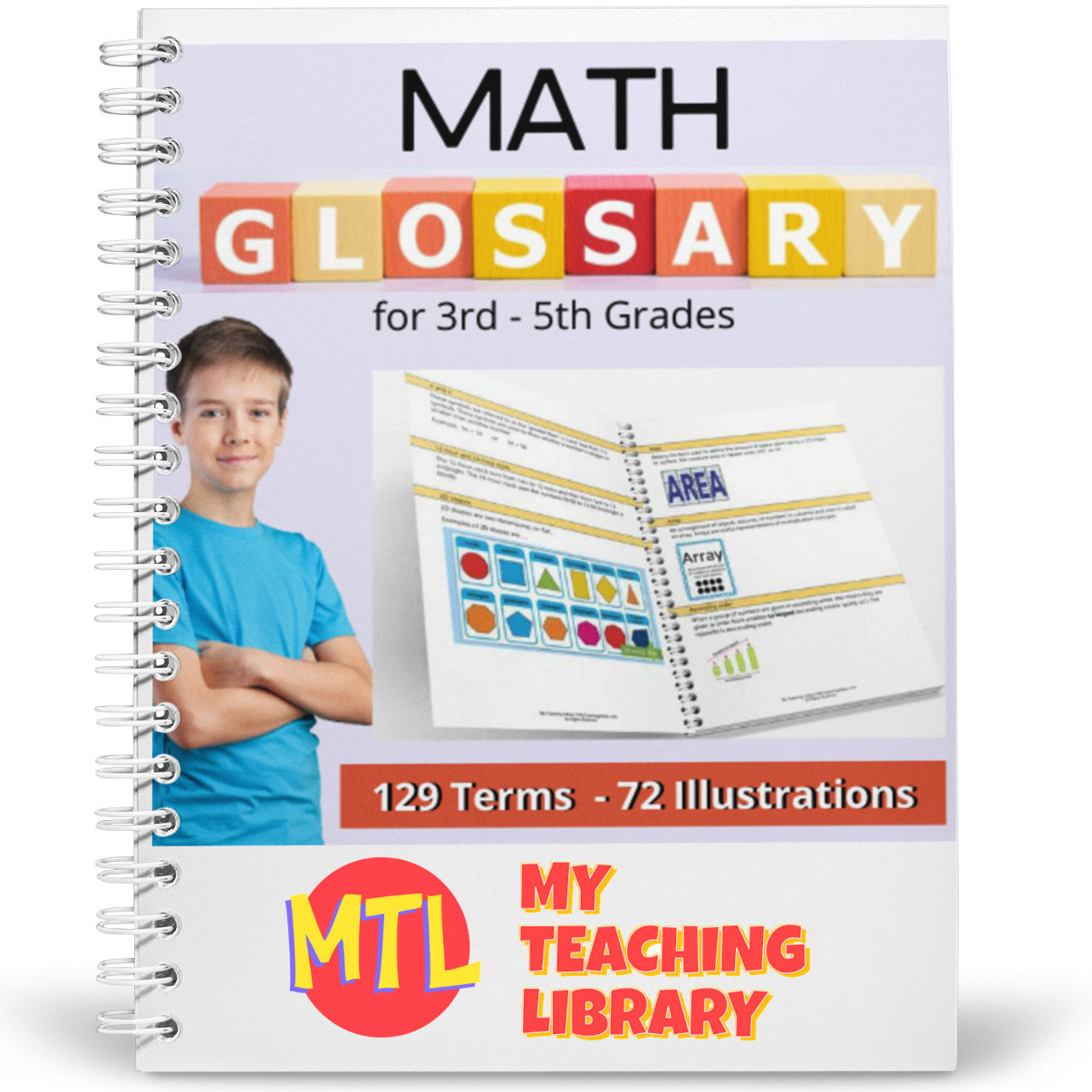
One resource that is highly recommended for all elementary math students is our Math Glossary:
How to Tell If Your Child Is Ready for Algebra
Moving on to formal algebra is all about thinking more abstractly. This mental leap—from using hands-on materials to using variables like x to stand for any number—usually happens naturally between the ages of 11 and 13, around the start of middle school.
Introducing algebraic ideas too soon can overwhelm students and make them dislike math.
Look for these key abilities to know if your child is ready for algebra. These skills are essential building blocks for success in high school mathematics:
Strong Number Sense and Math Fluency
Your child should confidently work with numbers, understand their relationships, do basic mental calculations, and grasp negative numbers.
Skill with Patterns and Relationships
Algebra is really just an advanced way of spotting patterns. Can your child quickly see and extend patterns? This skill is vital for understanding things like linear equations and functions.
Ease with Variables
Having experience with problems involving missing numbers helps children get comfortable with variables. If your child can replace a box or question mark with x in a problem, they’re likely ready for simple algebra. They also need to understand that the equal sign (=) means both sides are balanced—a key idea for solving equations.
A Problem-Solving Attitude and Interest
It’s important for teachers and parents to make sure students have truly grasped the basics before moving on to full algebra. A solid understanding of algebraic concepts leads to positive experiences, while gaps can result in long struggles and extra homework.
When Do Kids Usually Start Learning Algebra?
Algebra is often tied to certain ages or grades, but the reasoning behind it starts well before then.
The Official Introduction in Middle School
Most students formally begin pre-algebra and algebra in middle school (ages 11–14, grades 6–8). Here, teachers introduce mathematical language and ideas such as:
Key Pre-Algebra Concepts
Students learn to work with algebraic expressions, solve equations, and use inverse operations to isolate variables.
The Hurdle of Eighth Grade Algebra
If foundational concepts aren’t solid, starting algebra in eighth grade can be intimidating. Students are expected to manage negative numbers, fractions, and variables all at once. That’s why having a strong base in earlier math is so important for success throughout high school.
Here are highly recommend Pre-Algebra and Algebra Resources. These begin with the mathematics courses in 6th-8th grades (continuing to prepare students) and move on through more complex resources…
Mathematics I | Middle School – Student Edition
Mathematics I | Middle School – Teacher Edition
Mathematics 2 | Middle School – Student Edition
Mathematics 2 | Middle School – Teacher Edition
Mathematics 3 | Middle School – Student Edition
Mathematics 3 | Middle School – Teacher Edition
Pre-Algebra | Middle School – Student Edition
Pre-Algebra | Middle School – Teacher Edition
If you are looking for Pre-Algebra specific skill reinforcement, check out these resources:
Pre-Algebra | Adding and Subtracting Fractions
Pre-Algebra BUNDLE | Adding and Subtracting Decimals
Pre-Algebra | Equations with Defined Variable
Once a student is ready for Algebra, there are our recommended resource:
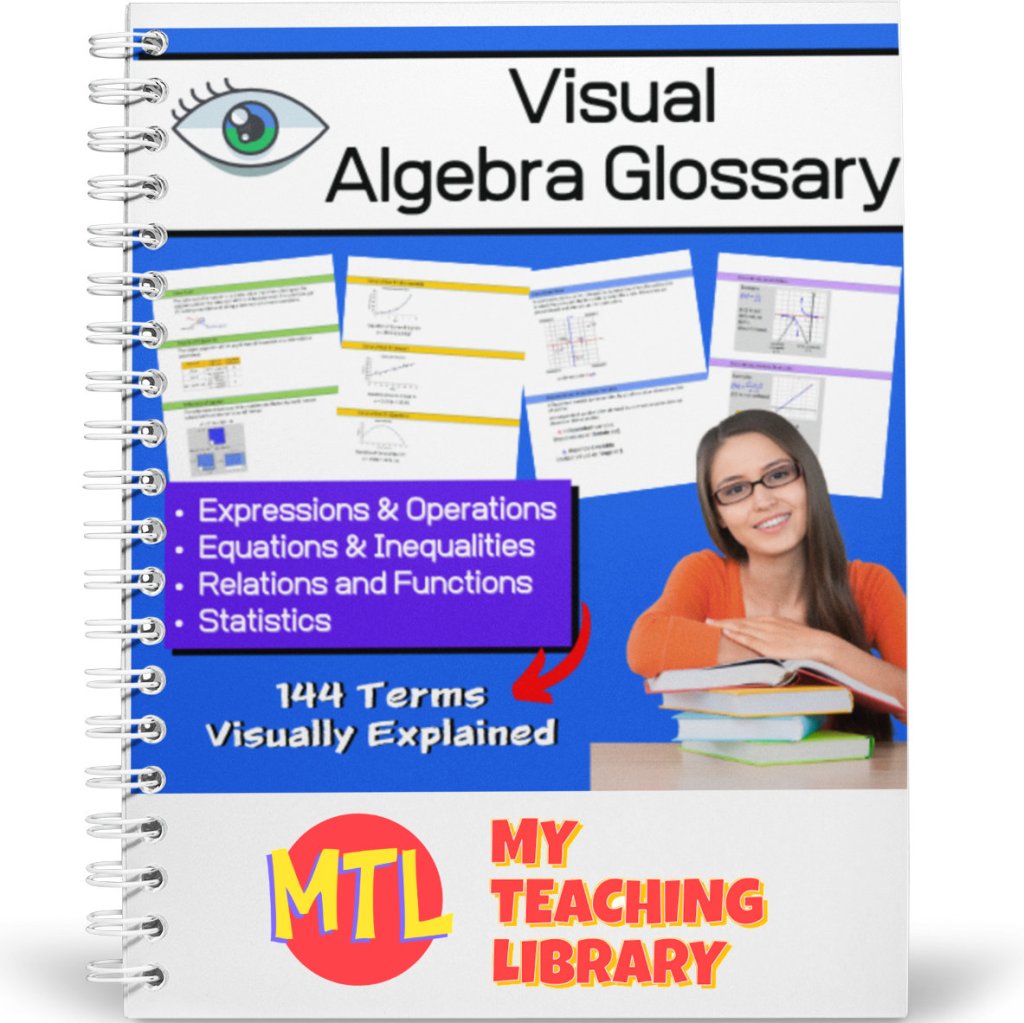
Visual Algebra Glossary
Recommended for all Algebra students!
Algebra 1 | Student Edition
Algebra 1 | Teacher Edition
Additional High School level Algebra resources that are instantly downloadable on My Teaching Library:
So You Want to Understand…Algebra?!
A First Book in Algebra
Elementary Algebra
High School Algebra

My Teaching Library is a massive digital library of educational materials (over 80,000 pages) offering homeschooling families and teachers the ability to build custom, child-centered learning pathways for students. Whether you choose more traditional-based learning or one that is interest-guided and project-based, My Teaching Library provides the freedom to pick and choose, changing course and adjusting as needed, creating a unique educational journey for every child!
Why Do Families and Educators Choose My Teaching Library?
1. Diverse Range of Materials
My Teaching Library goes beyond standard worksheets, workbooks and boxed curricula and. You’ll find:
- - Core Subjects: Comprehensive sets for Math, Science, Language Arts, and Social Studies.
- - Engagement Tools: Lapbooks, notebooking units, games, and “shape books” that make learning more hands-on.
- - Niche Topics: Resources for life skills, character education, holiday-themed activities, and even reprints of rare, out-of-print textbooks.
2. Flexibility for Families and Classrooms.
Because the library covers PreK through 12th grade, it is ideal for families (with one or multiple children) as well as classrooms. Based on the number of students in your family or classroom, the differing levels and abilities of the student(s) you are teaching, you can pull a high school biology unit, a 4th-grade math worksheet, and a preschool letter-tracing pack all from the same site without managing multiple subscription memberships.
3. Cost-Effective “All-Access” Memberships
One of the biggest draws is the All-Access memberships. Instead of buying individual curricula sets, workbooks and units (which can run into the thousands), a membership provides unlimited downloads for all grades, subjects, and topics. Members never pay listed prices of any resource as prices are listed as $0.00 for members!
- - Lifetime Membership: An affordable one-time payment for unlimited access to the entire library for as long as you teach!
- - Annual Membership: Want to try it out first or will only be teaching for a year? Start with our yearly membership.
Non-membership customers pay listed prices for all resources.
4. Expert-Led and Reliable
My Teaching Library is owned by a former classroom teacher and homeschooling mom with over 30 years of experience. Materials are created and curated to ensure they are pedagogically sound and effective in a learning environment.
Discover more from Library of Learning Resources
Subscribe to get the latest posts sent to your email.
